Welcome to the family

Take a deep breath — you've got this.

Bringing home a tiny puppy is one of the most exciting moments of your life. It's also the moment when a little preparation makes a huge difference. This guide covers the four things every new Designer Yorkies pawrent should have under their belt before pickup day:

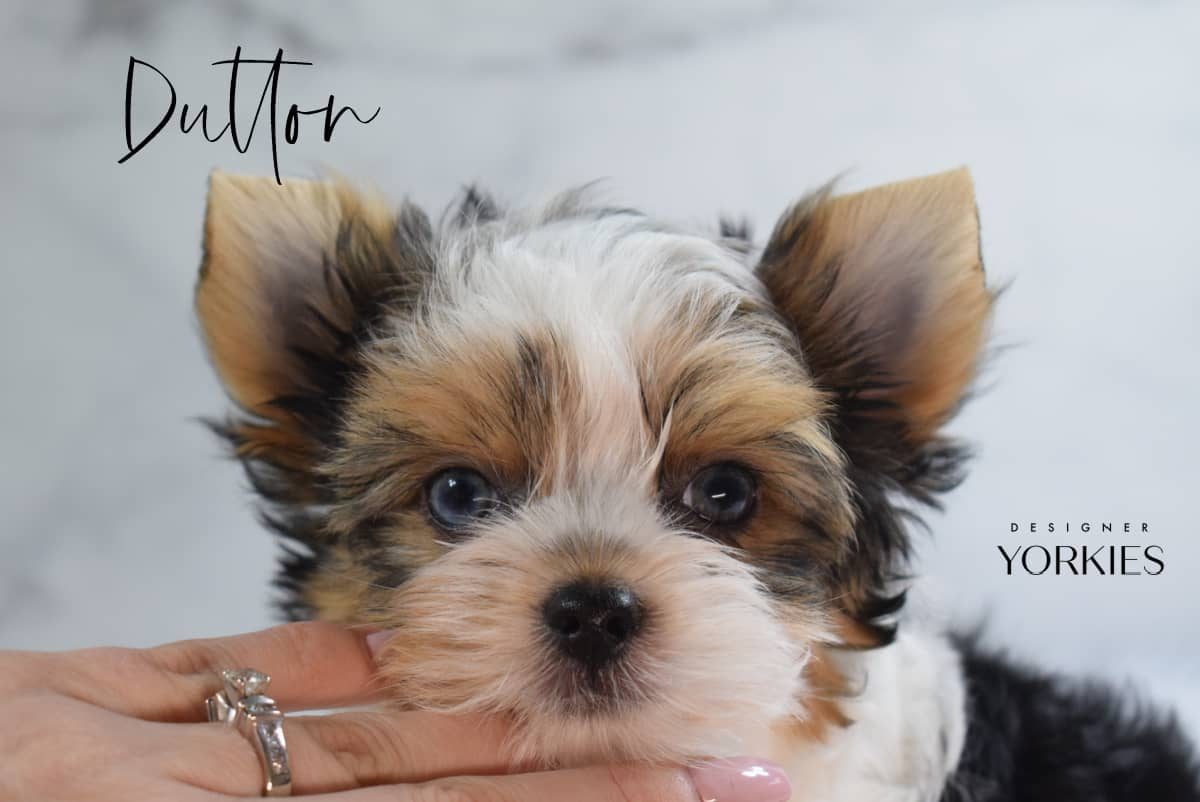
A Babydoll puppy from Designer Yorkies
Pickup Day Prep

Before you bring them home

The week before pickup is the perfect time to get organized so your puppy can settle in stress-free.

  • Book a vet appointment within 48 hours of pickup — required to keep our health warranty active and a great way to start a relationship with your vet.
  • Pick up the food they're already on so the transition is smooth. Ask us which brand and how much your specific puppy is eating.
  • Set up a quiet "puppy zone" — a small, safe area with their crate or playpen, water, a soft blanket, and a couple of toys. Tiny puppies overwhelm easily.
  • Stock up on Nutri-Cal or plain honey for the first weeks — see the hypoglycemia section below for why this matters so much in toy breeds.
  • Plan for short, calm visits the first 3–5 days. Hold off on big family meet-and-greets, dog parks, and travel. Let your puppy bond with their new home first.
  • Have someone home for the first few days. Toy breeds need to eat every 3–4 hours when they first come home and shouldn't be left alone for long stretches.
  • Keep our contact info handy: contact us anytime — we're here for you with questions about feeding, sleep, training, anything.
A tiny babydoll Yorkie
Make It Safe

Puppy-proofing your home

Tiny puppies can squeeze into shockingly small spaces. Walk through every room at puppy-eye level and look for these.

🔌 Cords & cables

Tuck phone chargers, lamp cords, and TV cables behind furniture or inside cord covers. A curious teething puppy can chew through a cable in seconds.

🌿 Toxic plants

Lilies, sago palm, pothos, philodendron, aloe, peace lily, dieffenbachia — all dangerous for dogs. Move them up high or out of the house entirely.

🍫 Dangerous foods

Chocolate, grapes/raisins, onions, garlic, macadamia nuts, anything with xylitol (gum, peanut butter, sugar-free baked goods), alcohol, raw bread dough, coffee.

🪙 Small swallowables

Coins, hair ties, rubber bands, jewelry, kid toy parts, batteries, sewing pins, magnets. If it could fit in their mouth, assume they'll try.

🪜 Stairs & high places

A jump from the couch or a tumble down a flight of stairs can break tiny legs. Use baby gates, pet stairs, and never let them play unsupervised on furniture.

🚪 Doors & gaps

A 3-pound puppy can slip through balcony railings, deck gaps, and screen doors. Check every exterior opening and consider closing bathroom doors so they can't fall behind the toilet.

🧴 Cleaners & meds

Pet-proof cabinets or move everything up high: bleach, detergent, dishwasher pods, fertilizer, antifreeze, all human medications including Tylenol/Advil/Aleve.

🐾 Soft spots

Reclining chairs, kitchen-stool legs, treadmills, rocking chairs — anywhere a tiny puppy could get crushed. Pause before sitting, closing, or moving heavy furniture.


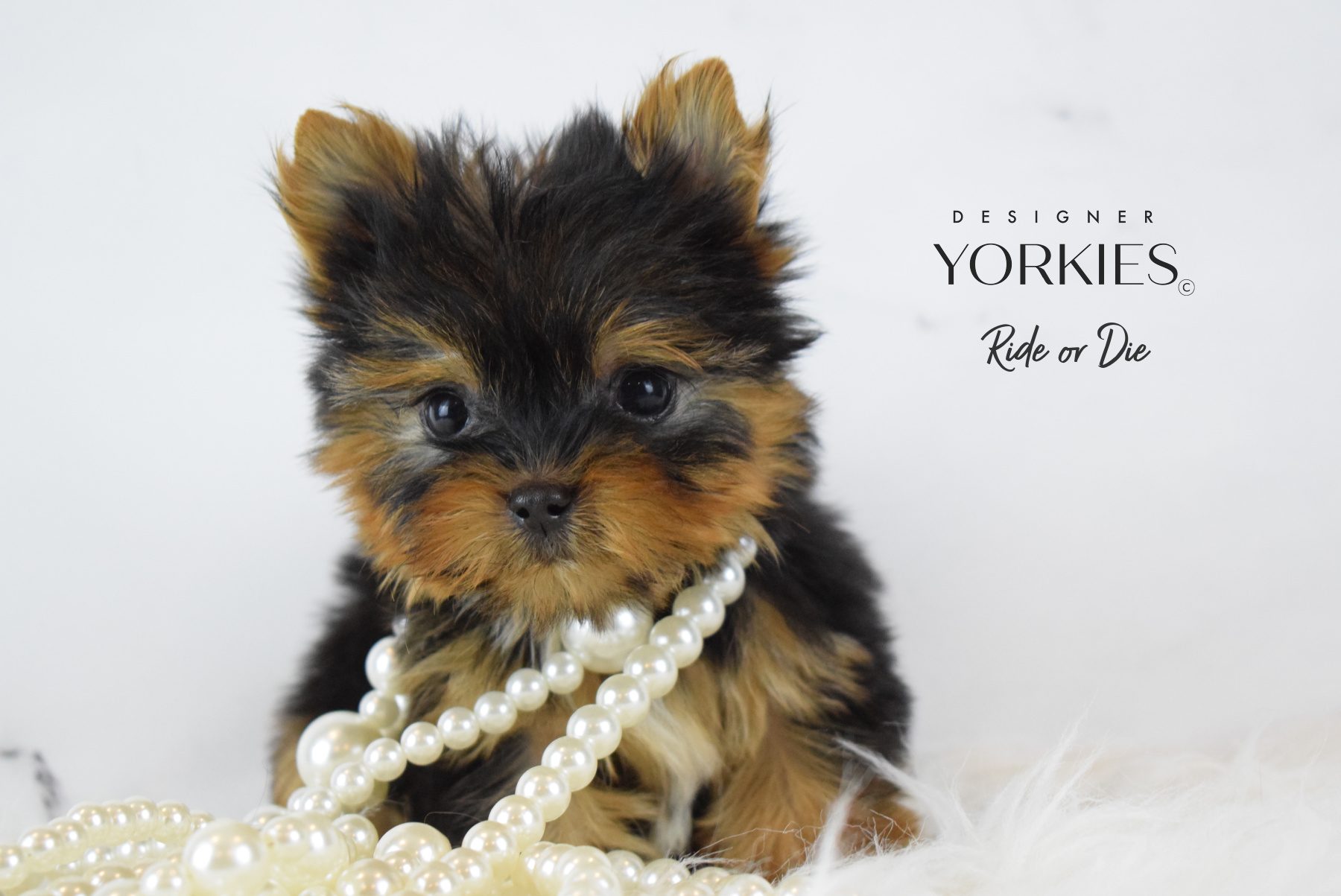
A Yorkshire Terrier puppy from Designer Yorkies
Everything You'll Need

The small-dog shopping list

Curated specifically for toy breeds. Skip the giant crates and beds — your puppy will be tiny their whole life.

Food & water

  • Small-breed puppy food (the brand we send home with you)
  • Shallow, non-tip stainless or ceramic bowls
  • Bottled or filtered water (toy breeds can be sensitive to tap water)
  • Slow-feed mat or small puzzle bowl
  • Wet food or warm water to soften kibble at first

Sleep & comfort

  • X-Small crate (perfect-fit, not "they'll grow into it")
  • Soft washable crate bedding
  • Snuggle Puppy or a heartbeat toy for the first nights
  • Small cozy bed for daytime naps in the family area
  • Crate cover / light blanket for darkness

Potty & training

  • Pee pads (and a pee-pad holder so they don't shred them)
  • Enzyme cleaner (Nature's Miracle or similar)
  • Tiny treats — soft, small, low-calorie
  • Clicker if you'll do clicker training
  • Puppy gates / exercise pen for the puppy zone

Health essentials

  • Nutri-Cal high-calorie paste (or plain honey)
  • Pet-safe thermometer
  • Styptic powder for nail nicks
  • Vet's number on your fridge + a backup emergency vet
  • Pet first-aid kit

Grooming

  • Soft slicker brush + small metal comb
  • Gentle puppy shampoo & light conditioner
  • Tear-stain wipes (for light-coated Yorkies/Biewers)
  • Nail clippers or grinder sized for toys
  • Toothbrush + pet toothpaste — start early!

Play & bonding

  • Small soft toys (no parts they can chew off)
  • Teething toys — soft rubber for tiny mouths
  • One calm chew (puppy bully stick or rawhide-free)
  • Lickimat for stress-busting downtime
  • Puppy-safe rope toy for gentle tug

Going out

  • Step-in harness (collars can hurt tiny tracheas)
  • Lightweight 4–6 ft leash
  • ID tag with your phone number
  • Pet carrier (airline-style if you'll travel)
  • Cold-weather sweater — toy breeds chill fast

Safety extras

  • Baby gates for stairs & off-limits rooms
  • Outlet covers in the puppy zone
  • Cord protectors / cable management
  • Pet stairs or ramp for the couch & bed
  • Microchip registration (the vet will do this at the first visit)
The most important section of this guide

Hypoglycemia in Toy Breeds

Hypoglycemia (low blood sugar) is the #1 medical emergency in tiny puppies. The good news: it's easy to prevent and easy to treat if you catch it early. Read this section carefully and keep the supplies on hand.

A tiny Babydoll from Designer Yorkies
Keep on hand always:
  • Nutri-Cal high-calorie paste
  • Plain honey or Karo syrup
  • Your vet's number
  • Emergency-vet number for after hours

Warning signs

Hypoglycemia can come on fast — sometimes within minutes after stress, missed meals, or cold. Watch for:

  • Sudden lethargy or weakness
  • Wobbly walking, stumbling, or trouble standing
  • Glassy or unfocused eyes
  • Cold paws and pale or grayish gums
  • Trembling, shaking, or muscle twitches
  • Disinterest in food, water, or play
  • Collapse, seizure, or unresponsiveness (severe)

Prevention

Day-to-day habits that keep blood sugar steady in your tiny puppy:

  • Feed small meals every 3–4 hours for the first weeks home
  • Always leave dry food and fresh water down — never an empty bowl
  • Give Nutri-Cal or a dab of honey 3 times a day for the first week or more — we'll show you the routine before pickup
  • Keep play sessions to ~20 minutes, then nap time
  • Keep your puppy warm — cold drains their tiny reserves
  • Avoid stressful situations: no daycare, no dog parks, no big crowds the first weeks
  • Don't let kids over-handle or chase the puppy

Treatment (act fast)

If you see any warning signs, treat immediately while you call the vet:

  1. Rub honey, Karo syrup, or Nutri-Cal directly onto the gums (about ¼ teaspoon for tiny breeds). Don't try to make them swallow if they're weak — gums absorb it.
  2. Warm them up. Wrap in a soft towel, hold them against your body, or use a heating pad on low under a folded towel.
  3. Within 5–10 minutes you should see them perk up. Offer a small bland meal (warm wet food or softened kibble) once they're alert.
  4. Call your vet immediately — even if your puppy recovers. Repeat episodes need a medical workup.
  5. If they don't respond within 10 minutes, are seizing, or collapse — head to the emergency vet right away.

When in doubt, reach out. We have decades of experience and would always rather hear from you than have you second-guess yourself.

Contact Us
You've got this.

We're with you every step of the way.

Designer Yorkies families are family forever. If anything comes up — big or small — we're just one message away.